An ode to porridge
Porridge purists should look away now as it probably constitutes oatmeal high treason to tinker with a national treasure. I do, honestly, enjoy porridge in its purest form: slowly stirred to creaminess with just a pinch of salt, topped with brown sugar or golden syrup and milk. That’s the way my grandmother made it for me as a child, and I still like to cook it her way - a bit thicker than sophistication allows, so it spins like an oatmeal island in a milky lake.
But at the risk of being clonked with a spurtle by the porridge police, I felt the urge this grey old January day to have a bit of fun with grey old porridge. It wasn’t so much the basic porridge I wanted to play with, I just wanted to add some sparkle to it.
Porridge oats come in a range of varieties, all of which produce a different final texture. I won’t go into the detail here, because Sybil Kapoor explained it beautifully in the Guardian a while back for those who want details on oats in all its manifestations. Neither will I pronounce on basic porridge making. Felicity Cloake tested a range of methods before coming up with her own rather lovely way to cook it.
All I will say is that my husband favours cooking the oats in half water, half milk because the result is so voluptuous, but that’s too much for me of a morning. If simmered slowly to allow the starch to do its thing (about 20 minutes I reckon), and stirred constantly, cooking oats in just water is just fine. I use a ratio of one cup oats to two-and-a-half cups water - which might appear an unnecessary quantity of liquid at first - but delivers perfect creaminess if simmered slowly. And it’s surprising how far its stretches - one cup of oats is ample to get four of us breakfasted.
I started this exercise not with porridge porridge, but rice porridge. I’d read of a version eaten in Finland at Christmas, and it sounded too decadent not to try. I melted a knob of butter in a saucepan, and stirred in 1 cup of risotto rice, then added hot milk gradually (with a spoon of sugar added to the milk pan help the flavour along) just as you would with stock. I stirred constantly for about 20 minutes until the rice was just so.
Girl Child and I sat down to eat this with a splodge of damson jam and a splosh of milk on top, and my goodness me. As well as looking pretty as a picture, it was creamy divine. Don’t do what Girl Child did and add too much jam, as this is a very rich breakfast indeed. In fact, it’s probably more a pudding than a meal to set you up for the day, but hey.
The Bircher porridge I made next was a much more virtuous beast. Bircher muesli is one of my favourite breakfasts because I can’t seem to get enough of the taste of raw soaked oats. Among the gazillion words written about matters porridge on the internet, I’d noticed that some people toast their oats with a little butter before simmering. I can now report that this is a pretty good trick and imparts quite a nutty flavour - but do watch that the oats don’t catch in the frying pan.
Bircher porridge
- Knob of butter
- 1 cup porridge oats
- 2.5 cups water
- 1 apple, chopped into small dice
- 1 pear, grated
- 2 tablespoons golden syrup
- small handful nuts (not hazelnuts as they’re overpowering here)
- small handful cranberries or other dried fruit
- small handful mixed seeds
Melt the butter in a frying pan, add the oats and stir well. Toss over a medium heat until fragrant - this should take no longer than a couple of minutes. Bring the water to the boil in a saucepan, add the toasted oats and lower the heat. Simmer very gently, stirring constantly, until the porridge is thick but not yet completely tender, about 15 minutes. Add the diced apple and continue stirring for a further 5 minutes, or until the oats are cooked through. Remove from the heat and mix in the remaining ingredients. Let the porridge stand for five minutes before serving with fresh fruit and milk.
Next up was banana, pecan and maple syrup porridge, which seems to be heading back in the direction of pudding, I know. But then again it’s no more of a dessert than muesli is. This one doesn’t really need a recipe. Just toss a handful of pecans with a couple of tablespoons of maple syrup and a pinch of cinnamon and nutmeg. Spread out on a baking try lined with parchment and toast in a medium oven for about 8 minutes, or until the syrup has begun to caramelize, the nuts are toasted and you can smells deliciousness coming from the oven. Meanwhile, cook your porridge, adding a finely chopped banana halfway through. When the porridge is cooked, stir through the toasted pecans and serve with an extra swirl of maple syrup and some extra fruit if you like.
I was in two minds whether to include this final version or not. Let’s just say I drew the curtains, locked the doors and tried it out in private so I coud be sure no-one was looking. I’m not sure if I would cook this often, but the nuts and dried fruit make this actually quite delicious.
Cook the porridge as you normally would, then remove from the heat and add 60g blanched almonds that you have lightly toasted in a pan, 50g of grated plain chocolate (dark chocolate is too bitter here) and a handful of dried cranberries. Stir through until the chocolate is melted and incorporated.
Top with milk and enjoy joyfully, behind closed doors if you feel guilty.
Top 10 uses for pomegranate molasses
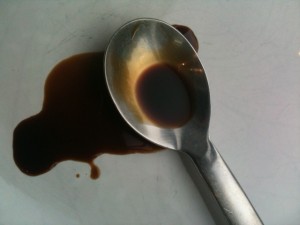
I’d noticed this bottle staring at me every time I opened the refrigerator door, giving me the evil eye from its place among the other neglected jarred stuff. Pomegranate molasses. As common as muck for those who live in chichi parts, but for me a prize obtained after considerable effort on a visit to the big smoke.
 I had wanted this ruby-red, sweet-but-tart syrup specifically for Yotam Ottolenghi’s divine burnt aubergine with tahini and pomegranate, to serve with slow-roasted lamb. My guests fair licked the bowl clean, but with no plans to cook it again immediately, I had little idea what to do with the rest of the bottle. So being a no-waste zealot at the moment, I looked for some other uses for pomegranate molasses before it wound up on fridge death row.
So here you have it, Top 10 uses for pomegranate molasses. Note that I developed and cooked the first recipe but the others are untested ideas I’ve stumbled on, although they all look like pretty good bets to me.
1. Roast chicken with pomegranate molasses glaze
In a small bowl mix together 20ml pomegranate molasses, 1 teaspoon sumac, two minced garlic cloves, a squeeze of lemon, a large splosh of chilli oil and lots of salt and pepper. Mix well. Pat dry a whole chicken and prick the skin all over with a fork. Rub the pomegranate molasses mixture all over the bird and try to get a couple of teaspoons inside the pocket between the skin and breast. Place half a lemon and some fresh coriander inside the cavity, and roast the bird as per your normal method (for me that’s about 1 hour in a 190° oven, or longer depending on the size of the chicken). The skin will turn a deep mahogany and you may feel the need to cover with foil towards the end of roasting to stop it over-caramelizing.

Roast chicken with pomegranate molasses glaze
The resulting bird is incredibly juicy and received a unanimous thumbs up in our house. Some sweet potato roasted alongside the chicken was also enhanced by its proximity to the glaze. Despite the intense taste of pomegranate molasses straight from the spoon, cooked this way its attributes are more subtle. For that reason you won’t be pushing your luck if you also add a teaspoon of it to the roasting pan juices when making the gravy. This recipe also works really well with lamb, pork, duck, game or salmon.
2. Drizzle as it is over vanilla or chocolate ice cream.
3. Or combine 120ml of pomegranate molasses in a small pan with 90g grated dark chocolate and melt together over a low heat. This would be lovely spooned over ice cream or poached fruit. You could go the whole hog and add double to cream to make a ganache for a fabulously rich chocolate cake. Try this one for inspiration.
4. Add a teaspoonful to gin and tonic, a glass of champagne or soda water.
5. Whisk a spoonful into a basic vinaigrette and spoon over a dish like fig and prosciutto salad, or to add sparkle to a salad of mixed green leaves and herbs.
6. Add to cream cheese icing to jazz up plain cupcakes.
7. Stir a tablespoon or two through a stew, braise, tagine, chilli or soup to add an instant depth of flavour.
 8. Swirl through the basic egg custard when making vanilla ice cream.
9. Blitz together roasted bell peppers, roasted chilli peppers, fresh mint, cucumber, garlic, olive oil, lemon juice and a swirl or pomegranate molasses to make a robust dip to eat with flat bread.
10. Add a slurp to your favourite onion relish recipe or use this version from New York deli Dean & Deluca.
Next stop, Top 10 uses for half-used jars of preserved lemon, bacon fat, piccolo peppers, pickled eggs, …..
Amelia’s beetroot and hazelnut cake
There are those who start the new year with herbs, deprivation and caffeine withdrawal migraines …. and then there’s me. With the rain pelting down, the guests all gone and the kitchen cocoon-warm with the under floor heating on, the first joyous task of 2012 could only be baking in my pyjamas.
I climbed the cook book mountain for inspiration, and while self-denial was not on the agenda, neither was sugar craft or a chocolate overdose. Maybe there was a tilt at being virtuous in settling on my friend Amelia’s Beetroot and Hazelnut Cake, or maybe it was the most appropriate first outing for a tomato-red KitchenAid (thanks Santa!). Whatever, it turned out mighty fine.
This cake is a bit like a carrot cake in that it’s moist and substantial, and because kids can’t identify the good-for-them bits, they don’t turn up their noses. The best part about making this cake is the raspberry coloured batter that pales away to a golden crumb studded with purple jewels when baking is finished.
I used two tins here instead of the suggested three, simply because I don’t possess that many tins of the same size (nor the room to accommodate them). Sometimes that crucial cake-versus-icing ratio goes a bit wrong for me with a three-layer cake, but I don’t think that would be a problem here as the cake itself is not overly sweet.
It is enrobed in a buttery cream cheese icing, baby grow-pink with the inclusion of beetroot juice. I’m sure Lorraine Pascale would recommend refrigeration between coats of icing to achieve a flawless angular finish, but life’s a bit short, really. Having said that, I do admit to sprinkling some spare beetroot shards with icing sugar and crystallizing them in a low oven, before using them to decorate the top. It just seemed a bit naked without it ….Click here for the recipe.