Blythburgh Free Range Pork Belly stuffed with chorizo and fennel
You think you know a little bit about food production and then someone like Alastair Butler puts you right. This second generation pig farmer, part of the family behind acclaimed Blythburgh Free Range Pork, tells me less than 1% of the pork we eat in the UK is free range. So all that bacon, pulled pork, belly, gammon and ham hock we’ve been scoffing? Chances are it’s from animals whose lives haven’t been great, unless you make it your business to seek out the highest welfare free range porky stuff.
We all do it. We spot “outdoor reared” or “outdoor bred” on a package of supermarket pork and toss it in the trolley, happy (and possibly smug) to pay a bit more for meat supposedly reared in higher welfare conditions. The truth is that “outdoor reared” or “outdoor bred” are terms used to describe pork from animals that are born in fields but moved into sheds after weaning, so much of their lives is actually spent indoors. It’s misleading, confusing and should have been addressed by regulators years ago. When it comes to imported pork, just avoid: it’s all produced from animals who never see the light of day.
It’s not surprising that Blythburgh Free Range Pork is favoured by leading UK chefs like Heston Blumenthal and Mark Hix. During a recent food writers’ visit to Suffolk, I was lucky enough to see how the animals contentedly snuffle in the dirt, race round their fields and snooze on fresh straw in large airy tented barns. This pork really is different. The extra space and freedom to behave instinctively and roam free allows the animals to lead active lives, which burns more calories and results in slower growth than sedentary pigs fattened quickly indoors.
“Eating quality comes from slower growth and stress-free living,” Alastair says. “The slower growth means the fat has been around the muscle for longer and delivers more flavour.”
The Butlers turned their conventional pig farm into a free-range venture in the 1990s after Waitrose persuaded them to give it a try. Alastair’s father Jimmy was initially unconvinced - he had never eaten free-range pork and doubted it would taste much different to the meat he had producing for years - but the experiment was hugely successful. By 2000, the family had reverted completely to free range production and moved away from supplying supermarkets to work with specialist butchers and caterers under their own Blythburgh Free Range Pork brand.
“Supermarkets believe you can’t have fat in pork products, that it will put customers off,” Jimmy says. “But fat is where the flavour is - it tastes horrible with no fat. Intramuscular fat especially is vital for flavour.”
No longer hampered by supermarket demand for lean pork from animals bred and fattened quickly, the family was free to focus on animals that produced flavourful, high quality, slow-grown meat. They changed the genetic design of the pigs, and altered the feeding and breeding regimes to give the animals 6 months rather than 18 weeks to fatten. The result is amazing flavour that’s now sought after by specialty butchers (click here for online suppliers) and restaurants.
The recipe below was inspired by third generation butcher Gerard King, from craft butcher Salter and King, who gave us a butchery demonstration during our trip to Suffolk. This would obviously be wonderful as a hearty winter feast, but I’m very partial to roast meat in summer, when I serve it with a couple of salads - including one made with grains, with the pan juices (skimmed of fat) drizzled through as a kind of dressing.

- 1 tablespoon fennel seeds
- leaves from 2 thyme sprigs
- 1 teaspoon sea salt flakes
- 2 garlic cloves
- olive oil
- 1.5-2kg Blythburgh pork belly, skin on and scored
- 140g chorizo cooking sausages, skins removed and meat chopped
- 2 onions, peeled and quartered
- 2 carrots, chopped
- Preheat the oven to its hottest temperature. While this is happening, pop the fennel seeds, herbs and salt into a mortar and pound until crushed and well combined. Scoop out half this mixture and set to one side, then add the garlic cloves and a splash of olive oil and pound to a paste.
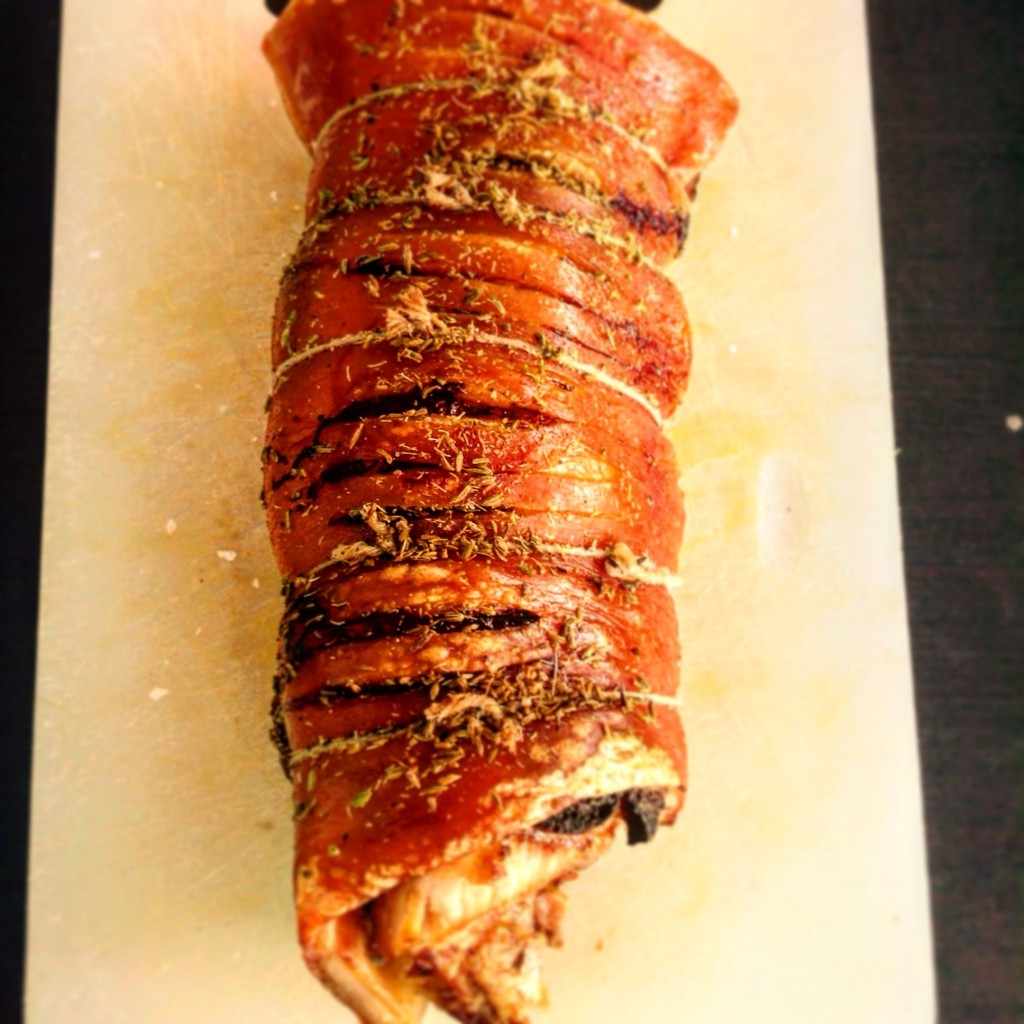
- Place the pork belly skin-side down on a chopping board and spread the garlicky, herby paste all over. Scatter over the chorizo and gently press it into the meat with your palms. Roll up the belly into a tight cylinder and tie with the kitchen string in 3 places. You can neaten off the ends with a sharp knife if you like, although I don't bother. Rub the reserved herbs and salt into the top of the scored skin.
- Put the ribs in a large baking tray and add the onions and carrots. Place the rolled pork belly on top and drizzle with a little olive oil. Roast for 30 minutes, then reduce the heat to 140C and cook for a further 3.5 hours, or until meltingly tender. Perfect served with garlicky mash in winter, or a grain salad for a summer roast.